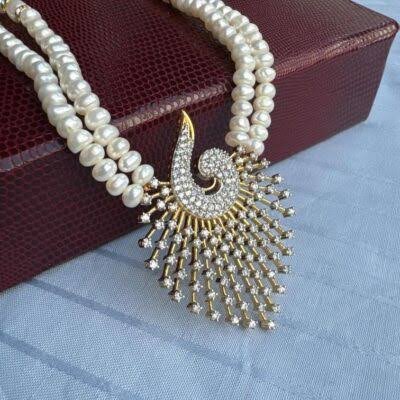
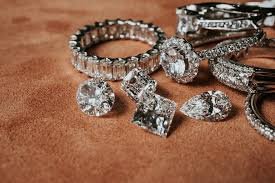
After being cast, the raw metal piece is cleaned to get rid of any leftover mold material. Carefully cut away extra metal, such sprues and connections. Setting stones is one of the most delicate parts of the procedure if the design includes jewels.
To make sure that the stones are safe and look good, they must be set very carefully. Depending on the design, several techniques such as prong setting, bezel setting, channel setting, and pavé setting are employed. Craftsmen at the best custom jewelry manufacturer make sure that stones are securely fastened while yet being as bright and visible as possible.
This step requires a lot of expertise since even a little misalignment may change how things seem and how long they last.
Final Inspection and Quality Control
Before being finished, every item goes through stringent quality control. This makes sure that it fits the criteria for design and durability.
Inspectors look at the size, symmetry, stone security, and quality of the surface. Before final approval, any mistakes or problems are fixed. This step checks that the jewelry looks great and is built to last.Making custom jewelry is a complicated and professional process that turns creative ideas into real art that you can wear.
To show the form, structure, and details of the jewelry item, hand-drawn or computer images are made. These drawings assist improve the proportions and look at other design options. With new technology, Computer-Aided Design (CAD) software is now commonly utilized to make exact 3D models. Ethical procurement of resources is now also a big concern in contemporary production. The selecting procedure makes sure that the jewelry looks good and works well at the same time.
CAD Modeling and Accuracy in Technology
The following stage after finishing the design sketch is to make a detailed CAD model. You may rotate and look at this model from all sides, which will help you find any design problems before you start making it. Different setting methods, such prong, bezel, pavé, or channel setting, are used to delicately put gemstones into the design. Each approach has its own look and use.
Wax Modeling and 3D Printing
After the CAD model is approved, it is commonly turned into a real wax model utilizing 3D printing. This wax model is an important part of seeing how big and how the jewelry item will seem in real life. It lets manufacturers look at dimensions and make last changes before casting.
Within the jewelry industry, mass production means making a lot of the same patterns on an assembly line. Using molds and automatic machinery, this method makes a lot of metal pieces at once. The goal is to make a lot of things quickly while keeping them all the same and cutting down on costs. Every part can be changed to fit your style or your brand’s image. Standardized materials are usually used in mass production because they are easy to find and don’t cost much. There are quality control methods in place, but the focus is not on choosing the best or rarest materials for each piece, but on keeping things the same across big numbers. Because of this, quality can vary based on the price.
Quality of Work and Level of Skill
Craftsmen and artists with a lot of experience are needed to make custom jewelry. For each piece, changes, stone setting, and final work may need to be done by hand. The work that goes into it is often more complicated and takes more time, but the finished goods are very detailed and well-made.
More machines and routine tasks are used in mass production. A lot of the work is now done by machines, but trained workers are still needed for things like planning and quality control. This cuts down on the amount of hand-crafted precision but speeds up and improves the economy of production.
How Long It Takes to Make
When it comes to mass production, on the other hand, plans must be set in stone. When a drawing is finished, it is copied exactly as it was. When handmade jewelry is made, the production method is very thorough and tightly managed. It starts with coming up with an idea and continues with CAD creation, wax modeling, casting, putting the stone, and finishing. Careful attention is paid to every step, and changes can be made at any time.
For mass production, on the other hand, robotics and standard models are very important. After a sample is accepted, it is used to make a lot of pieces that are exactly the same.
Making a lot of things at once is much faster. Thousands of items can be made in a short amount of time once the production line is set up. This means it can be used for seasonal lines, high-street demand, and fashion styles that change quickly. Mass output is great at being consistent and being able to grow. Every piece that is made is almost exactly the same, so the quality and look are always the same. For brands that need to keep their products the same in all foreign areas, this is a must.
On the other hand, custom production is not as easy to scale up or down. Its main goal, though, is not personalized creativity, but rather speed and replication.
What The Market Wants And What Consumers Want
Some risks of mass production are not being able to customize, not being able to be unique, and quality differences between groups. Also, patterns may not stand out as much to customers. It can show status, feeling, custom, or just your own style. There are two main ways that jewelry is made in today’s global market: custom making and mass production. Both ways meet different customer wants and standards.
Summary
There are pros and cons to both making items to order and making a lot of them. Mass production is great because it’s cheap, can be scaled up, and is consistent. Custom jewelry manufacturer is great because it’s one-of-a-kind, well-made, and has emotional value. Since the original design files and information about the work are available, custom jewelry is easier to change sizes and make changes to.