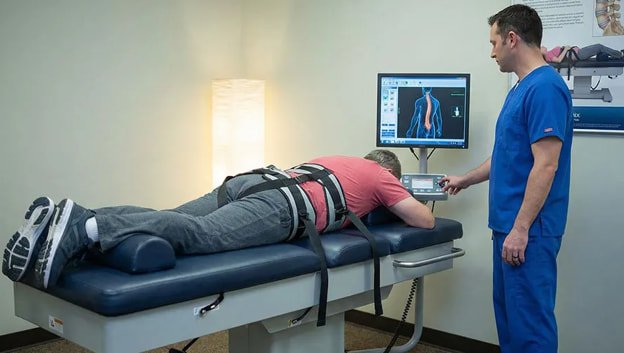
Chronic spinal pain sometimes dominates daily life, making simple activities feel unbearable. Most people experiencing persistent discomfort discover that conventional treatments occasionally fail to deliver meaningful relief. Contemporary patients discovering spinal decompression machine therapy realise how much this approach differs from traditional interventions. Mechanical traction gently separates vertebrae, reducing pressure on compressed nerves. Pain relief sometimes emerges through natural biological healing rather than temporary symptom masking. Understanding how decompression therapy functions reveals genuine possibilities for recovery. Back pain management depends entirely upon addressing underlying compression issues rather than accepting chronic discomfort indefinitely.
Reducing Nerve Compression Safely
Nerve compression sometimes occurs when vertebral discs shift, pressing against delicate nerve tissue. This pressure occasionally creates radiating pain throughout limbs, affecting mobility substantially. Decompression therapy gently stretches the spine, creating negative pressure within disc spaces. Disc material sometimes returns to normal positioning, relieving nerve irritation gradually. Mechanical traction permits targeted treatment without surgical intervention or extensive downtime. Herniated discs occasionally respond remarkably well to consistent decompression sessions. Pain reduction sometimes follows as compressed nerves finally receive relief from pressure. Patients occasionally discover sensation returning to previously numb areas after treatment.
Improving Disc Hydration
Spinal discs occasionally lose hydration through ageing and repetitive stress activities. Dehydrated discs sometimes bulge, pressing against surrounding nerves problematically. Spinal decompression machine therapy creates pressure changes encouraging fluid reabsorption into disc centres. Rehydrated discs regain height and structural integrity gradually. Disc nutrition improves through enhanced fluid circulation. Disc degeneration sometimes slows considerably with consistent therapy. Pain reduction frequently accompanies disc rehydration improvements. Movement flexibility sometimes increases noticeably within weeks.
Relieving Lower Back Discomfort
Lower back pain sometimes stems from multiple vertebral levels simultaneously, complicating treatment. Sitting occasionally aggravates symptoms through increased compression forces. Decompression therapy addresses several problem areas during single treatment sessions. Lower lumbar segments respond particularly well to traction mechanisms. Sciatica symptoms sometimes diminish dramatically following consistent therapy. Pain relief permits returning to activities previously impossible. Mobility restoration sometimes transforms daily functioning substantially. Quality of life improvements often exceed patient expectations.
Addressing Neck Tension Issues
Cervical spine compression sometimes develops through poor posture or previous injuries. Neck pain occasionally radiates into shoulders and arms, causing significant discomfort. Decompression therapy carefully stretches cervical segments without irritation. Nerve impingement sometimes releases, permitting improved blood flow. Headaches occasionally diminish when cervical decompression reduces nerve irritation. Range of motion sometimes increases noticeably after a treatment series. Patients occasionally report feeling lighter and more mobile. Chronic neck stiffness sometimes resolves through consistent therapy sessions.
Promoting Natural Healing Mechanisms
Bodies possess a remarkable capacity to heal themselves given proper conditions. Decompression therapy removes mechanical obstacles inhibiting natural repair processes. Growth factors sometimes increase within decompressed disc areas. Inflammation occasionally decreases as compression stress diminishes. The healing cascade sometimes accelerates through improved blood supply. Tissue regeneration sometimes becomes possible without intervention medications. Patients sometimes experience gradual improvements continuing beyond treatment. Long-term relief sometimes follows completed therapy courses.
Avoiding Surgical Complications
Spinal surgery occasionally creates scar tissue limiting mobility. Surgical risks sometimes outweigh potential benefits substantially. Decompression therapy offers a non-invasive alternative to addressing root problems. Anaesthesia complications become irrelevant with mechanical therapy. Recovery time permits continuing normal activities immediately. Repeated procedures sometimes become unnecessary with successful decompression. Cost considerations favour conservative treatment approaches. Patients sometimes avoid permanent structural changes to spines.
Improving Quality Of Life
Chronic pain sometimes steals enjoyment from previously loved activities. Depression occasionally accompanies persistent physical discomfort. Decompression therapy sometimes permits returning to hobbies and exercise. Sleep quality sometimes improves dramatically, reducing pain overnight. Social activities become possible when mobility increases. Work productivity sometimes increases noticeably. Mood improvements frequently accompany pain reduction. Life satisfaction sometimes transforms entirely through pain relief.
Conclusion
Spinal decompression machine therapy transforms how people experience chronic back and neck discomfort. Nerve compression is reduced through gentle mechanical traction safely. Disc hydration improves gradually, restoring structural integrity. Lower back pain sometimes resolves completely following treatment. Cervical spine compression releases, permitting improved mobility. Natural healing mechanisms activate, removing compression obstacles. Surgical complications become completely avoidable. Quality of life improvements extend far beyond pain management itself. Those pursuing decompression therapy discover relief exceeding expectations remarkably.